



Hunting goddess Diana riding deer stone carving
This is a stone carving of Diana, the hunting goddess, riding a deer, showing a high dynamic beauty and classical artistic features. Diana (corresponding to Artemis in Greek mythology) rides naked on the back of a stag that is leaping into the air, holding the antlers in her right hand to maintain balance, and holding a long bow in her left hand, showing the dynamic moments of hunting. The front hoof of the stag is vacated, and the rear hoof is pedaled on the base decorated with tree roots. The whole stag is inclined upward, which has great visual impact.

Veles Statues
Is an important god in Slavic mythology, mainly in charge of the earth, water and the underworld. It is regarded as the protector of domestic animals, especially cattle, and the ruler of the dead. In Slavic cultures, he was closely associated with death and the cycle of nature and was considered a powerful god, in charge of the end of life and the destination of the soul. The image is changeable, sometimes depicted as a god with horns and long beard, sometimes as a giant snake or half-man and half-snake, symbolizing his strength and wisdom. Known for his cunning and wisdom, he is often opposed to Perron, the god of thunder and lightning, and the confrontation between the two symbolizes storms and lightning in nature.

Zeus head stone carving
It is the king of the gods in ancient Greek mythology and the head of the twelve gods of Olympus. The god of the sky and thunder and lightning, with thunderbolt as a weapon, maintains the order between heaven and earth. He is the son of the second generation god king Cronus of the Titan clan, whose mother is Ria. To avoid the fate of being devoured by Cronus, he was hidden by his mother and raised in Crete or by the Goddess Nimve. As an adult, Zeus rescued his brothers and sisters who had been devoured by his father and fought with them against Cronus, eventually overthrowing the rule of the Titans. Known for his wisdom and strength, his reign symbolized the rise of the new theocracy and the fall of the old. play a supreme role in mythology

Nephele
Nefele is a cloud in Greek mythology that resembles Hera. At a banquet, King Ixion of Lapith flirted with the goddess Hera. Zeus made Hera invisible and created Nephele to replace her. After getting drunk, Ixion mated with this illusion and produced a centaur that was half human and half horse. Later, this ancestral centaur mated with a mare on Mount Pelion and became the ancestor of all centaurs. Afterwards, Nefele wandered in the halls of the Olympics. Hera ordered the king of Viotia, Atamas, to marry her and they had two children, Phileas and Haile.

Sculpture - "Monkey King" Sun Wukong
Sun Wukong is naturally intelligent, lively, loyal, and resentful of evil, representing wit and bravery in folk culture. The legend of Journey to the West emerged in the Tang Dynasty and continued until the Ming and Qing Dynasties. The collection of these legends in the Ming Dynasty is known as "Journey to the West". In these folk myths of the past dynasties, Sun Wukong was worshipped as a god by the Chinese people.
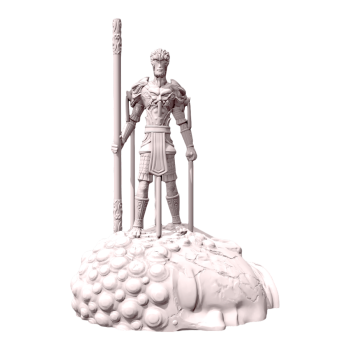
Sun Wukong 3D Printing
Sun Wukong (also known as the Monkey King, the Monkey King, the Monkey King, the Monkey King, and the Fighting Buddha) is a character in the classical Chinese mythological novel "Journey to the West". Born from the creation of immortal stones, the birthplace is located on Huaguo Mountain in Dongsheng Shenzhou. He is revered as the "Monkey King" for leading a group of monkeys into the Water Curtain Cave. In order to learn the art, he crossed the sea and became a disciple of the founder of Subhuti, named "Sun Wukong". He learned advanced spells such as the Great Immortal Technique, the Seventy Two Transformations, and the Cloud Dance.
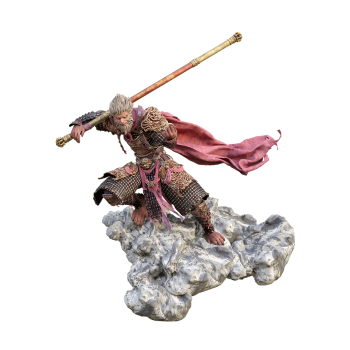
The exquisite 3D model of Sun Wukong, the Monkey King of the Sky, in "Black Myth: Wukong"
It is one of the main characters in the Chinese classical novel "Journey to the West", written by Wu Chengen. Renowned for his wit, bravery, and ever-changing abilities, he was an important protector of Tang Monk and his disciples on their journey to the West to obtain Buddhist scriptures. Born in Shuilian Cave of Huaguo Mountain, he calls himself the Monkey King. Having the power of seventy-two transformations, it can transform into any creature or object at will. He is also proficient in soaring through clouds and mist, and can jump up to 108000 miles in one leap. Once caused chaos in the Heavenly Palace, challenged the authority of the Heavenly Court, and was ultimately suppressed by the Buddha at the foot of the Five Elements Mountain. Later, under the guidance of Guanyin Bodhisattva, Sun Wukong became the great disciple of Tang Sanzang and began his journey to the West to obtain Buddhist scriptures.

Tu Di Temple
Tudi Temple is a traditional Chinese temple dedicated to the God of Land, also known as Tudi Gong Temple or Tudi Ye Temple. It is an important place for believing in land gods and ancestors, widely present in cities, villages, and farmland across China. Originating from the worship and gratitude towards the land god. Land is regarded as the protector of agriculture, and people believe that the land god can bless the harvest of crops, the peace of families, and the prosperity of communities. It has also become a gathering place for many farmers and residents, where people come to worship the land god on specific festivals and important occasions. Usually built in the central area of villages or cities, the architectural style varies depending on the region and cultural background

Eight Immortals Crossing the Sea Han Zhong Li Clay Carving Ornament
The Eight Immortals Crossing the Sea by Han Zhongli "is an ancient Chinese legend that tells the story of the Eight Immortals embarking on a cross sea adventure to help Han Zhongli search for immortal grass. The Eight Immortals are Han Xiangzi, Tie Guai Li, Cao Guojiu, Zhang Guolao, He Xiangu, Lv Dongbin, Lan Caihe, and Fairy Sister. They each have unique immortal skills and talents, and through cooperation, they overcame numerous difficulties and helped Han Zhongli successfully find the immortal grass. This story inherits the values of friendship, courage, and teamwork in ancient Chinese culture, and the image of the Eight Immortals crossing the sea has become one of the well-known figures in Chinese culture, often quoted and praised by people.

Chinese white ceramic birthday star painted statue
Shouxing, also known as the Antarctic Elder Star, is the god of longevity in ancient mythology. He is also a deity in Taoism, originally named Xingxing and one of the three stars of fortune, fortune, and longevity. After Emperor Qin Shi Huang unified the world, he built the Shouxing Temple in Du County near Chang'an. The late birthday star evolved into the name of an immortal. The Ming Dynasty novel "Journey to the West" depicts the birthday star holding a lingzhi mushroom, with a long head, large ears, and a short body. The "Warning to the World" has a mythological story of "three stars of fortune, wealth, and longevity". The birthday star in the portrait is an old man with white beard, holding a staff and a raised forehead. The ancients symbolized the longevity of the elderly. Often accompanied by deer, cranes, immortal peaches, etc., symbolizing longevity.

Popular Models
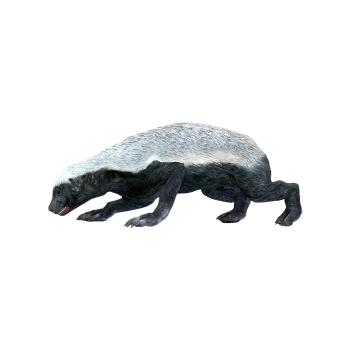
Honey Badger (3D animated model)
192 View
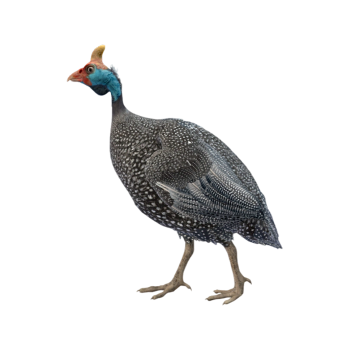
Guinea fowl (3D animated model)
163 View
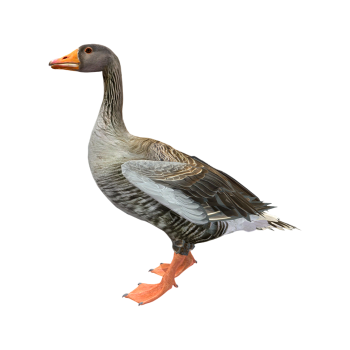
Wild Goose (3D animated model)
185 View
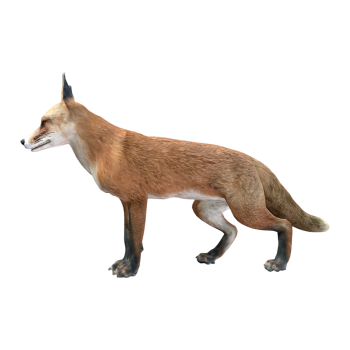
Red Fox (3D animated model)
153 View
Random Model

Soviet AK-74 Automatic Rifle
1125 View

Japanese VHS Player
664 View

Disassembled fuse lock
812 View

Lamborghini
592 View

McLaren P1MSO Supercar
1280 View

Blue Whale Model 3D Animation
1546 View

Outdoor broadcast loudspeaker
679 View

Badminton GLB Model
1516 View
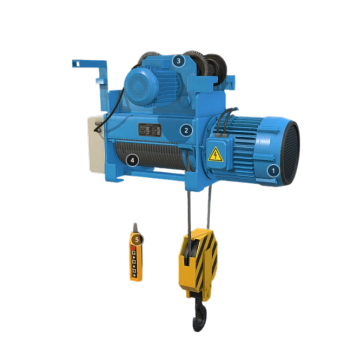
Z-type cable car
556 View
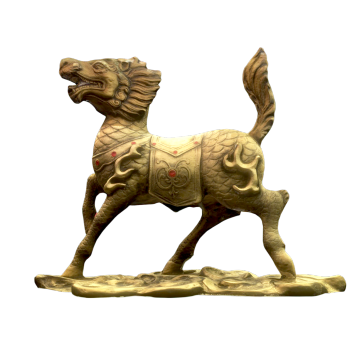
Kirin Statue in Qing Dynasty
739 View